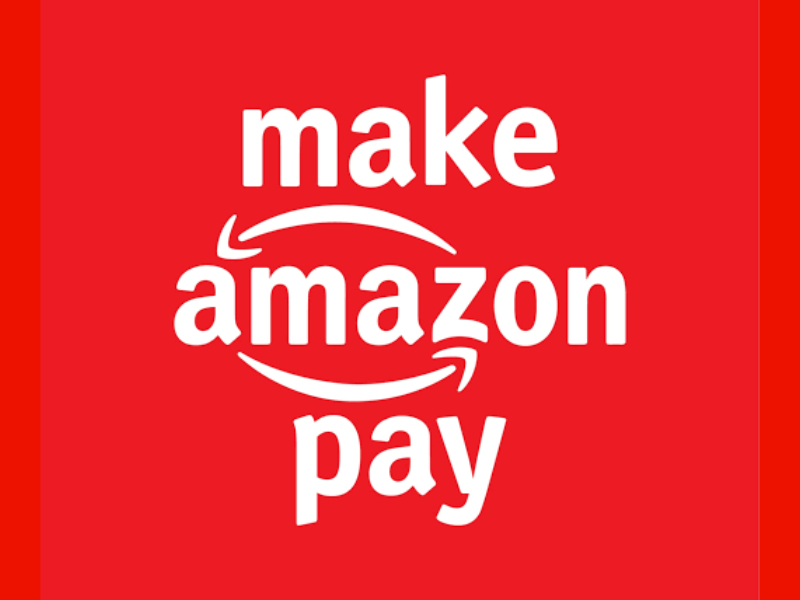
Trade union leaders from 19 countries representing millions of workers have called on governments to stop awarding public contracts to Amazon and Amazon Web Services (AWS), after a year in which US federal agencies committed more than US$3.5 billion to AWS. The letter has been made public ahead of Black Friday, the biggest shopping day for the E-commerce giant that unions and civil society have rebranded Make Amazon Pay Day, an annual global day of strikes and protests to hold Amazon accountable for labour practices, environmental impact and tax policies.
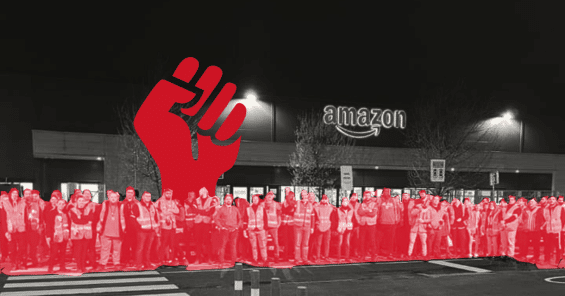
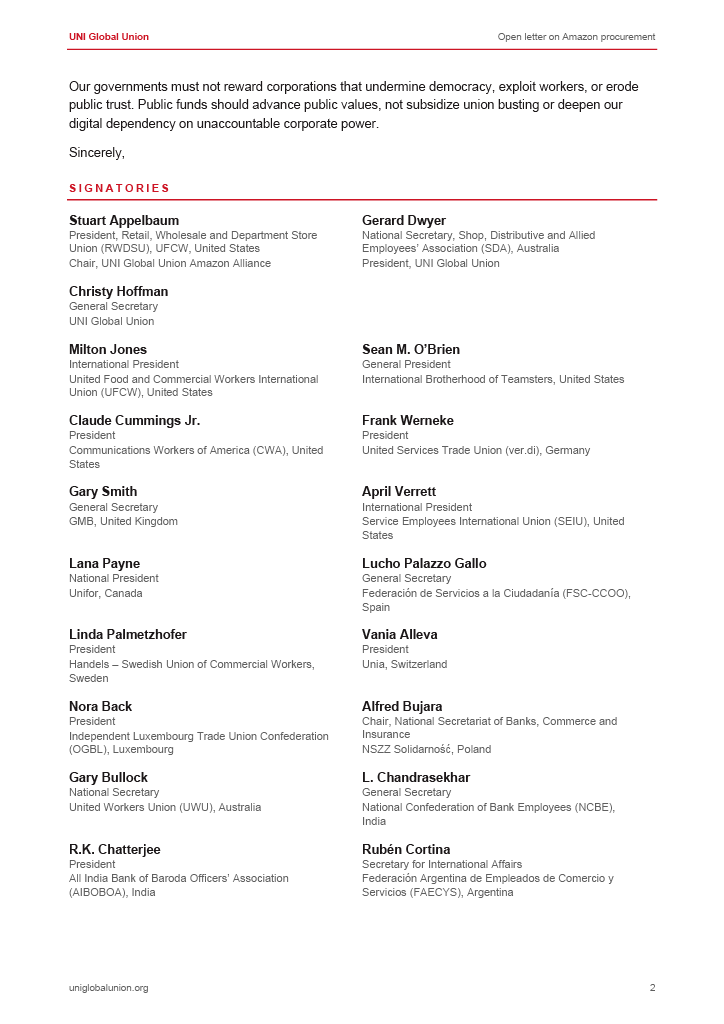
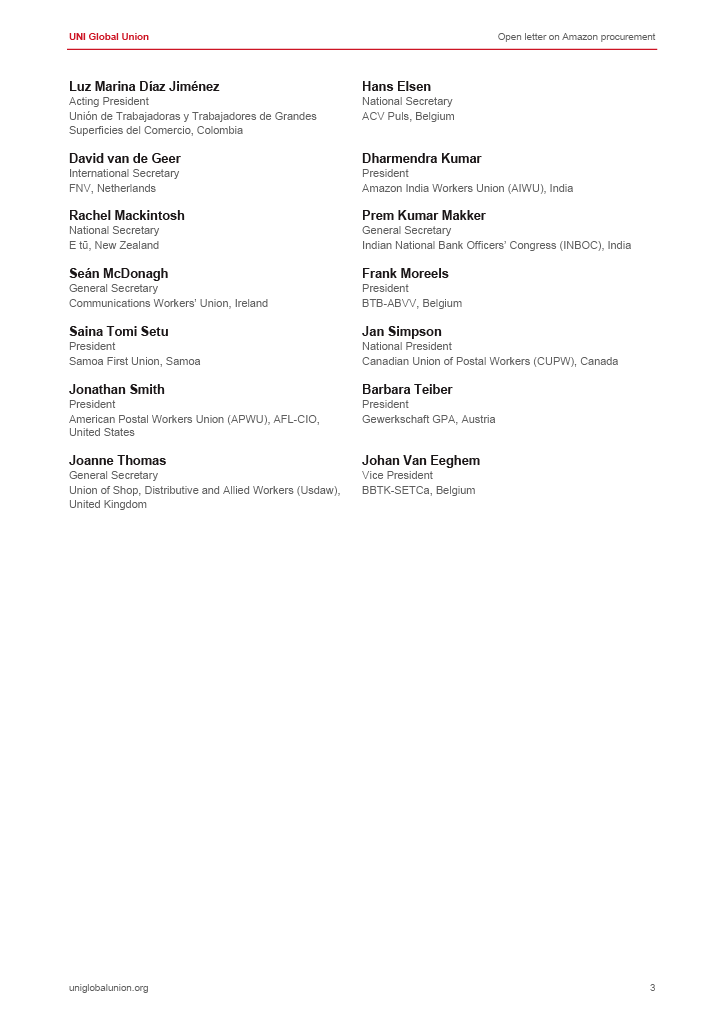
In an open letter coordinated by UNI Global Union, the heads of 32 unions warn that governments are becoming dependent on a company with a long and well-documented record of violating workers’ fundamental rights. The letter documents that record beyond the United States: in Germany, Amazon has refused collective bargaining despite more than a decade of strikes; in Quebec, it shut down its operations entirely when workers organized, putting thousands out of work.
The unions call on governments to review all existing and planned contracts with Amazon and AWS, to make respect for workers’ fundamental rights a mandatory condition of contract eligibility, and to exclude companies that violate those rights from future public tenders.
Christy Hoffman, General Secretary of UNI Global Union, said: “Every public contract is a choice about what governments are willing to pay for. Right now, taxpayers in country after country are paying Amazon while it shuts down warehouses, busts unions and tries to get labour laws struck down. Governments set the rules for who gets public money. They can require that companies respect workers’ right to organize and bargain, and they should start with the biggest contractor that refuses to.”
In January, the US Air Force awarded AWS a contract worth up to US$581 million for its Cloud One programme as a sole-source acquisition, without competition. In June, the Department of Homeland Security awarded AWS a single-supplier cloud contract worth up to US$2.56 billion over up to five years. In August, the General Services Administration awarded AWS a nine-year contract worth US$462.8 million for cloud services and modernization. Other agencies, including the Defense Advanced Research Projects Agency and US Customs and Border Protection, have also used sole-source justifications this year to buy or extend AWS services.
On 9 September, the European Commission proposed a Public Procurement Act to replace the three 2014 procurement directives with a single, directly applicable regulation. The proposal is now before the European Parliament and the Council. Public procurement accounts for around 15 per cent of the EU’s combined GDP – roughly €2.6 trillion a year.
In the UK, the Home Office published a notice on 30 October for a public cloud hosting contract worth £1.06 billion including VAT, describing it as a “renewal of AWS public cloud services”. On 5 and 6 November, after the plans were reported in the trade press, it amended the notice to remove the reference to AWS and to say the contract would be competed under the government’s G-Cloud framework. AWS looks set to win the contract, The Register reported.
Over the same period, Amazon has fought its workers’ right to organize through the courts. It has argued that the structure of the National Labor Relations Board is unconstitutional in an attempt to halt proceedings brought by the Teamsters – a bid the Ninth Circuit rejected. In June, a labour board judge ruled that Amazon broke federal law by refusing to recognize the Teamsters at a San Francisco delivery center where workers had shown majority support.
In Germany, Amazon has refused collective bargaining despite more than a decade of strikes. In Quebec, when workers organized, it shut down its operations entirely, putting thousands out of work.
The unions call on governments to review all existing and planned contracts with Amazon and AWS, to make respect for workers’ fundamental rights a mandatory condition of contract eligibility, and to exclude companies that violate those rights from future public tenders.